

How Layoffs Will Impact Diversity in Technology
Anyone who's been anywhere near the world of tech lately knows about the massive layoffs the sector has been experiencing. They're incredibly unprecedented and have left many individuals out of work. Unfortunately, the situation is even worse for Black Americans, who have been disproportionately affected by these layoffs and are now facing unique difficulties in the labor market. In this article, we'll explore the current landscape of layoffs, who it's affecting, why, and what we can do to ensure that minority populations are not left behind.
Current Tech Layoffs
It's no secret by now that the tech sector is experiencing a massive upheaval. Companies are letting workers go at unprecedented rates, positions are changing locations, and hiring has slowed - or even frozen in some cases.
It's all a result of the past two and a half years' rollercoaster ride; like all things, COVID-19 disrupted the tech sector in March 2020. But in this case, the impacts were positive - as people hunkered down at home for lockdowns, demand for digital products, like software, devices, and tools skyrocketed. Major players saw their stocks surge, while the executives who headed those companies interpreted the state of affairs as a 'new era' of growth. This led to a massive hiring spree throughout 2020 and 2021 - you may remember some ambitious announcements from Amazon, Microsoft, and Google.
But now that the pandemic is slowly subsiding, tech companies are faced with a new reality. The world has mostly reopened, travel is possible, and people are no longer doing everything online. Demand has crumbled, and with it, the expensive plans laid out over the past 28 months.
Businesses are being forced to reevaluate their roles and strategies, in many cases coming to the conclusion that they went too far during COVID-19. Lots of big names have begun walking their decisions back; just recently, Meta announced a 13% reduction of its workforce, and Amazon as well with 10,000 cut jobs. This is having a major impact across the board, not just in terms of companies' long-term outlooks, but also the employees that have gotten them where they are today. Many tech professionals have found themselves undeservingly out of a job in the past few months. According to data from Statista, over 500 incorporated startups and tech-oriented companies in the United States laid staff off between April and October of this year, compared to only 20 in the first quarter. What's worse, experts believe that this trend is only going to continue in 2023 and beyond. The pace at which people have been let go is only increasing, and as inflation persists and discretionary spending continues to wane, it's unlikely that consumers will be doling out big bucks on tech any time soon.

Who's Affected?
It's worth noting that not everyone in the world of tech has been impacted by these layoffs in the same way. The effects have been rather disproportionate, mainly to those who work in sales and customer success roles. These positions are often considered low-level, and tend to be the first to go when budgets are tight. It's common for people in these roles to receive little to no severance pay, leaving them entirely without income.
The situation is worse for certain demographics of people than others. Studies have shown that minority professionals, particularly women and Blacks, are significantly more likely to lose their jobs than white male counterparts. This is even truer in tech, where the share of employees belonging to different ethnicities and genders is already quite low.
Younger people are also feeling the full force of these layoffs. While those in the middle of their career may be able to take a few months off and then find another job, college graduates and new hires entering the workforce are suffering the most. They won't be able to rely on experience or relationships like their senior colleagues, so many are stuck in limbo, waiting for their big break.
The History of Diversity In the Tech Sector
Although many African Americans are interested in tech as a career, few actually make it into the industry. This is due to many factors, including lack of resources and support, systemic racism and bias in hiring practices, and a lack of role models for African Americans in the tech industry. Not to mention, tech is an expensive field to get into, and many Black tech professionals simply don't have the same access to funding or education.
On top of higher barriers to entry, African Americans and other minorities are often victim to racial bias and prejudice in the workplace. They may not have access to the same opportunities or resources as their white counterparts, and may experience microaggressions on a daily basis. This can make it difficult for minority tech professionals to thrive in the industry, and at the same time, act as a deterrent for those who would've been otherwise interested in joining.
The Initiatives for Change and Setbacks They Now Face
The past ten years have marked a turning point in diversity in the tech sector and greater professional world as a whole. It was back in 2012, 2013, and 2014 that many major companies began to fully embrace the value of diversity and embed it into their organizational practices. Apple, Facebook, Google, and Microsoft were among the first to proudly publish annual diversity reports to appear transparent about their work in DEI. Many employers also began investing in diversity initiatives and hiring new workers from traditionally underrepresented backgrounds. However, most grew their population of white female workers who are the mathematical majority majority of the American population.
And to some extent, these efforts worked. The tech industry saw a nominal increase in the amount of Black professionals who occupied positions in software engineering, design, and product roles. Recent data from Zippia shows that Black workers make up roughly 7% of people who work for tech companies. That's still incredibly low, but can be considered an improvement when compared to a few decades ago. However, most Black employees don’t work in technical roles.
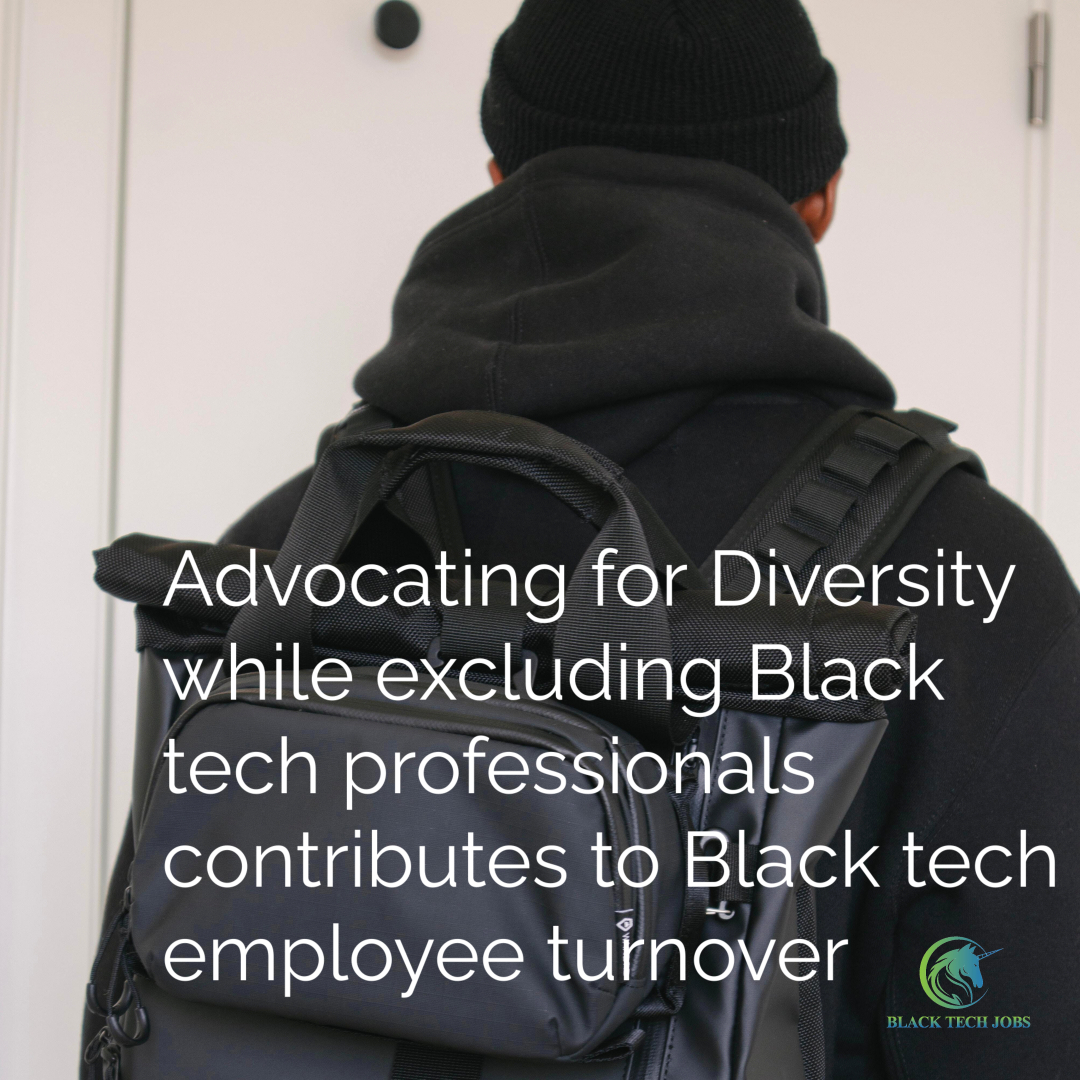
With layoffs abound and people being cut from their roles, the little progress that has been built up over the past few years has ground to a halt, and begun to reverse. Across the board, whether we're talking about the tech sector or the general workforce, Black Americans are disproportionately laid off when compared to their white counterparts. A prominent study by Fortune and SurveyMonkey at the beginning of the pandemic found that they're twice as likely to lose their jobs.
The United States unemployment rate currently sits at roughly 3.7% across the board, while it's a much higher 5.7% for African Americans.
This is even more astounding when you consider the fact that Black professionals are already underrepresented in tech. While comprising about 12 percent of the total U.S. workforce, only 8 percent of tech workers identify as African American.
This points to a huge disparity in the tech sector when it comes to diversity, especially of African American professionals. The current climate makes it even more difficult for these individuals to get a foothold in the industry and progress in their careers.
How It Affects Greater Equity
We all know that a good-paying job is the key to succeeding in America. Income is considered the core determinant of someone's ability to provide for themselves and their families - the home they live in, their quality of life, and the education they can offer their children. It has a ripple effect across generations, where the economic status of the family you're born into serves as a bellwether to your potential to succeed. This is a phenomenon especially familiar to Black Americans, who for centuries, have fallen victim to the country's institutionalized racism and discrimination. A majority of low-income neighborhoods in the United States are predominantly Black, while African Americans are also grossly overrepresented in prisons and correctional institutions. We live in a time where minority populations continue to feel the harmful effects of injustice that occurred decades ago. The only way out of this vicious cycle is to even the playing field and create educational and professional systems that fairly include everyone.
The tech sector has the potential to be a major vehicle for economic change; it's one of the highest-paying industries in the US, with a median annual wage about double that of other industries. And Black Americans aren't uninterested in careers in the field - to date, they've just been largely excluded from them. So, if tech companies were to make a greater effort to diversify their workforce, they could provide more opportunities for disadvantaged minorities and create more equitable systems of employment. This could have a dramatic impact on the economic security of African Americans, and by extension, racial equity in broader society.
The Potential Long-Term Implications
Beyond the stress of losing one's job and the immediate impacts that follow, today's mass tech layoffs have the potential to seriously harm Black Americans over the long-term. With the population among the more affected by layoffs, they're at a higher risk of adverse outcomes on a broad scale.
Some of these long-term effects include:
Decreased Income
The first and most obvious effect of a layoff is the decrease in income that comes with it. When individuals are cut from their jobs, they're not only left with no paycheck, but also no health benefits or other job-provided amenities. This means they must not only find a new job, but also face the financial burden of paying for healthcare and other key benefits.
Long-Term Unemployment
The second long-term impact of a layoff is the potential for long-term unemployment. When a company downsizes its workforce, workers are more likely to remain unemployed for an extended period of time which can have major effects on their career development and future job prospects. This can be especially damaging to Black professionals who have experienced discrimination in the job market.
Lower Retirement Savings
When workers experience a layoff, they often take on lower-paid jobs which impacts the amount of money they're able to save for retirement. This can be especially damaging as it hinders their ability to build wealth over the long-term and can significantly reduce their retirement savings.
Inequality in Access to Opportunity
Layoffs can contribute to inequality in access to opportunity for Black Americans. When workers experience long-term unemployment or take on lower-paid jobs, they're more likely to be unable to fulfill their career ambitions or find the same level of success as they might have had prior to the layoff. This can lead to a widening gap between those who are able to take advantage of opportunities and those who are not.
Undermining of Progress
Layoffs can also undermine the progress that has been made toward racial equity. While many companies strive to create an inclusive and equitable environment, layoffs can have the opposite effect by disproportionately impacting Black workers and creating an unequal playing field.
Reduced Health and Quality of Life
Finally, layoffs can have a significantly negative effect on an individual's health and quality of life. Data published by NBER shows that layoffs have the potential to increase mortality rates by as much as 15-20% over the 20 years following the layoff. With African Americans already at a higher risk of health-related issues, layoffs can further exacerbate this issue and worsen overall quality of life.
Multigenerational Impacts
Layoffs can seriously impact someone's quality of life and the results can be felt by multiple generations. When workers experience prolonged unemployment, their children often suffer as well due to reduced access to essential resources such as healthcare and education. It becomes harder to live in a good home and neighborhood, get into a good school, pay for university, and find a job. The process continuously repeats itself and creates situations like those we have now, where individuals are forced to rely on the government for assistance and can't earn enough to make ends meet.
What Can Be Done?
The tech industry has provided a great opportunity for many people to reach financial stability and develop their careers, but it's essential that we recognize the potential long-term effects of layoffs on Black tech professionals and work to ensure minority populations are not unfairly targeted or left behind. We're not solutionless when it comes to addressing the problem - it just requires purposeful strategy on a broad level. Importantly, it requires buy-in from hiring managers.
First and foremost, tech firms should not be afraid to prioritize diversity in their hiring practices. This includes proactive recruitment, retention, and engagement of Black professionals and addressing the biases that result in exclusion. While this has been tried over the years, it's especially important to improve and focus on heading into 2023. We've taken a couple of steps back over the proceeding months, and going into the future, we should recalibrate diversity strategies and focus on accelerating progress.
Second, companies should provide support programs for those who have been laid off. This could include job training, job placement services, and other resources to help individuals transition back into the workforce. While many of these layoffs are the result of tight budgets, companies should still prioritize the health and well-being of their employees and future former employees.
Additionally, tech firms should focus on creating a culture of inclusion and respect. This can help to ensure that Black tech professionals feel comfortable in the workplace and have access to the same opportunities as their colleagues. This can also help to reduce the risk of layoffs disproportionately targeting minority populations, as well as provide more support to those that have already been affected.
Finally, companies should look to invest more resources in creating career growth opportunities for both current and former employees. This can include offering job-shadowing programs or mentorship opportunities for those looking to advance in their career, as well as providing resources and training to those who have been laid off. By doing so, companies can help to ensure that employees have the tools and resources necessary to reach their career goals, regardless of their background.

What's Next?
It's hard to predict what will happen next in the industry, but one thing remains clear: we must be proactive in our efforts to support Black tech professionals and ensure that no one is left behind. The current labor market and the tech sector have provided us with an opportunity to make much-needed changes in our economic landscape. Tech companies must take responsibility for their role in creating a more diverse and equitable workforce. To make a meaningful difference – one that can benefit generations of Black Americans who have otherwise been sold short of their potential. It's only by doing this that we will truly be able to create a better future for all. Today’s tech businesses need more innovation and different ideas to accelerate better business outcomes and fewer unforeseen mass layoffs.
